TECHNOLOGY
EV technology, golf cart sized.
IMECAR engineers battery systems from 12 V marine packs to 1500 V commercial platforms. Everything on this page exists because it was built for vehicles far more demanding than a golf cart — and then put into yours.
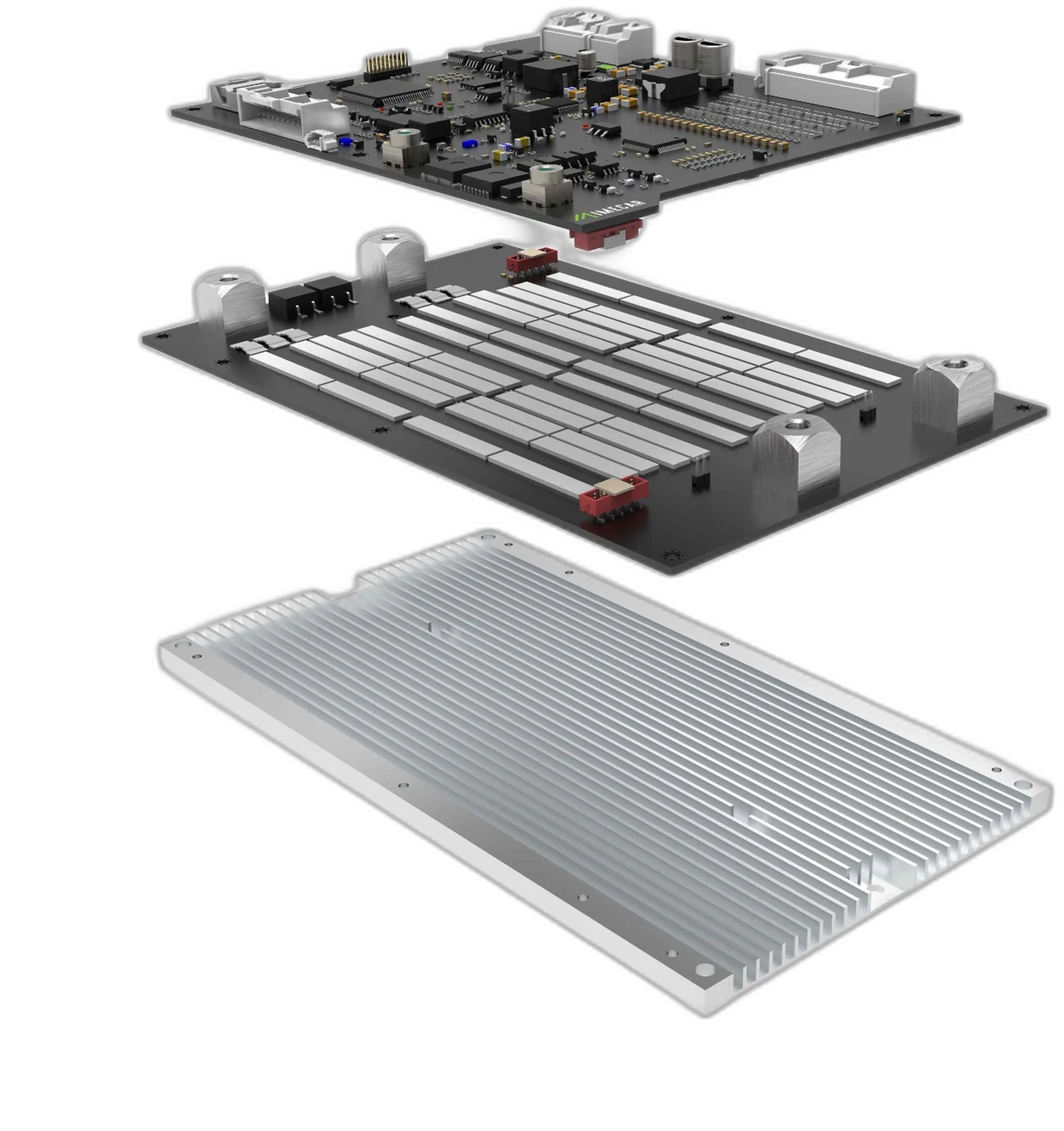
THE BRAIN · IM-P150
The same BMS family we put in commercial EVs.
Every L-FLEX is managed by the IM-P150: cell-voltage measurement accurate to ±0.8 mV — among the tightest in its class — with 14 temperature sensors watching cells, MOSFETs and the pack interior. It balances, protects, logs and reports. This is not a golf cart gadget; it's automotive electronics that happens to fit in a tray.
- Continuous discharge
- 300 A
- Peak discharge
- 550 A (5 s)
- Single-cell accuracy
- ±0.8 mV
- Pack accuracy
- ±10 mV @ 77 °F (25 °C)
- Temperature sensors
- 14 (±1.8 °F / ±1 °C)
- Temp sensing range
- −40 … 257 °F (−40 … +125 °C)
- Operating range
- −13 … 176 °F (−25 … +80 °C)
- SoC / SoH accuracy
- ≤ 3%
- Cell balancing
- ≥ 150 mA
- Interfaces
- CAN ×2 (isolated) + RS485
INSIDE THE MODULE
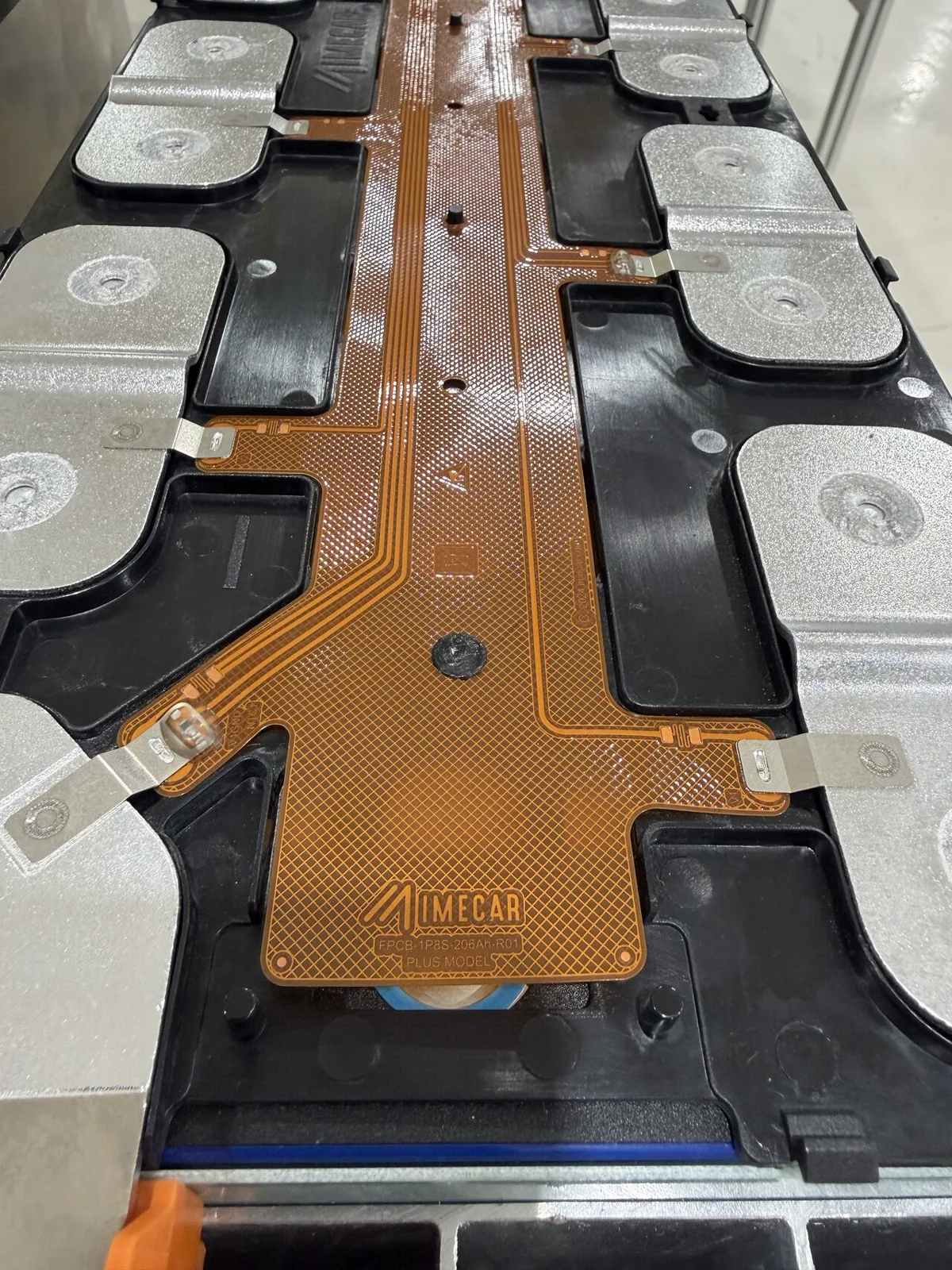
Every cell, sensed by a printed circuit — not a loose wire.
Look inside a cheap imported pack and you'll often find hand-run wires soldered to cell terminals. They fatigue with vibration, gain resistance, and drift — which feeds the BMS bad numbers and shortens pack life. Inside every L-FLEX module, a laminated flexible circuit contacts every cell instead: even sensing, stable contact over thousands of cycles, no wires to work loose.
IMECAR co-engineered this flex-circuit with Bosch Copperdot®. It's more expensive to build — and it's the difference between a pack that lasts ten years and one that quietly degrades.
THERMAL DESIGN
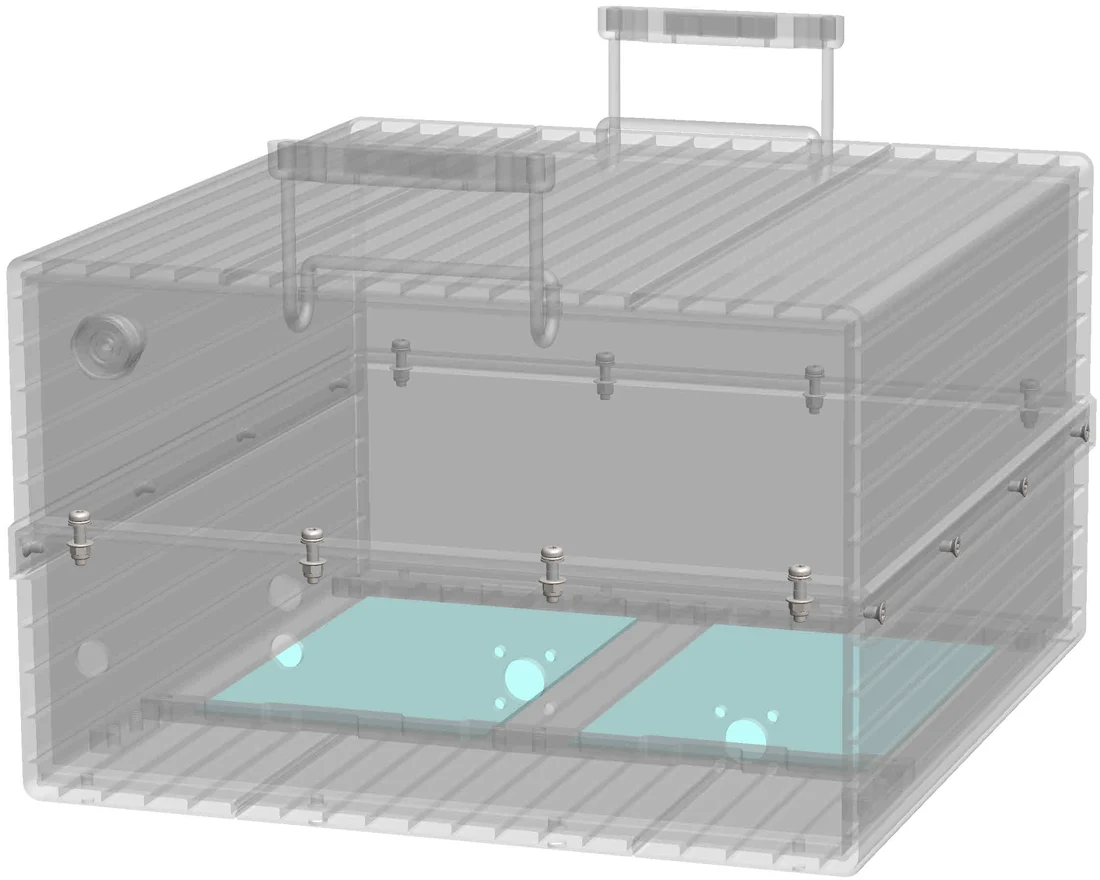
A case inside a case — a radiator, not a box.
Most golf cart packs are cells in a sealed aluminium box, which traps the heat they make. The L-FLEX enclosure is two walls with ventilation channels running the length of the pack between them, on three sides — top, left and right. The extra surface area works like a radiator, and air moving through the channels carries heat away from the cells instead of holding it against them.
Both ends of every channel are open, so air flows either way as the cart moves — no ducting to align and nothing to fit backwards. It is entirely passive: no fans, no pumps, no coolant, so there is no cooling component that can fail and leave the cells to cook. The IM-P150 then watches cell temperature on top of it, with 14 sensors.
This is why the packs hold up in Florida and Georgia summers, where a sealed box has nowhere to send the heat. We publish the mechanism rather than a cooling percentage — we have no third-party thermal test to point you at, and we are not going to invent one.
And the valve you hope never opens
Set into the end wall is a pressure-equalisation and relief valve — the round port you can see on the render. It does two jobs. Day to day it lets the pack breathe: as temperature and altitude change, pressure equalises through the valve instead of loading the seals and working the case. In the failure case it matters far more — if a cell ever vents gas, that pressure gets a deliberate way out, so the enclosure relieves in a controlled direction rather than rupturing.
This is ordinary practice on commercial EV and bus packs, and unusual on golf cart batteries. It is the same reasoning as the cooling channels: a sealed aluminium box has no answer when something goes wrong, so we did not build one.
CELLS TO PACK, IN-HOUSE
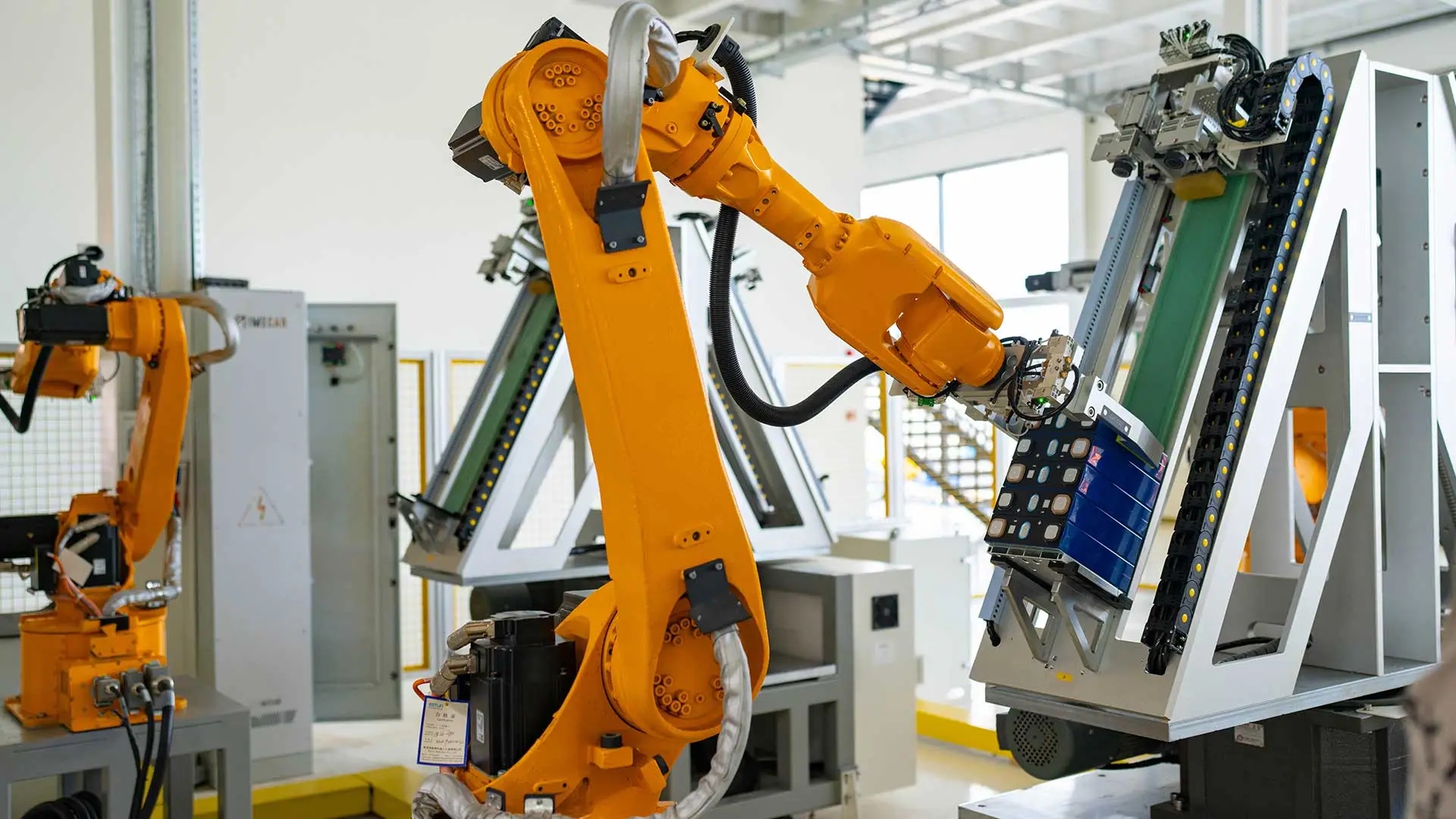
Robots don't do "assembled in USA" theater.
Cell sorting, module assembly, laser welding, end-of-line testing — one factory in Antalya, Türkiye, one quality system, certified by Bureau Veritas (ISO 9001, 14001, 45001). The robots in this photo build packs for commercial EVs and golf carts alike — same line, same welds, same end-of-line tests.
OEM since 2016
Golf cart and LSV manufacturers — including PilotCar — have built vehicles on IMECAR packs, BMS and vehicle control for nearly a decade.
Edison Award 2024
Autonomous Electric Cart (Advanced Vehicle Technologies) — awarded with PilotCar & Carteav. IMECAR supplied the packs, battery management and vehicle control.
Certified, not claimed
CE · UN 38.3 · ISO 9001 · ISO 14001 · ISO 45001 — audited and certified by Bureau Veritas. Certificates available on request, in writing.
SmartDash — the factory's view, on your phone.
Included on Pro, Max and Ultra: dash-mounted, wired to the pack — live state of charge, cell health, temperatures, and pack power on/off without ever opening the battery bay. Real apps on both stores: iOS · Android · Technical documents (PDF)